
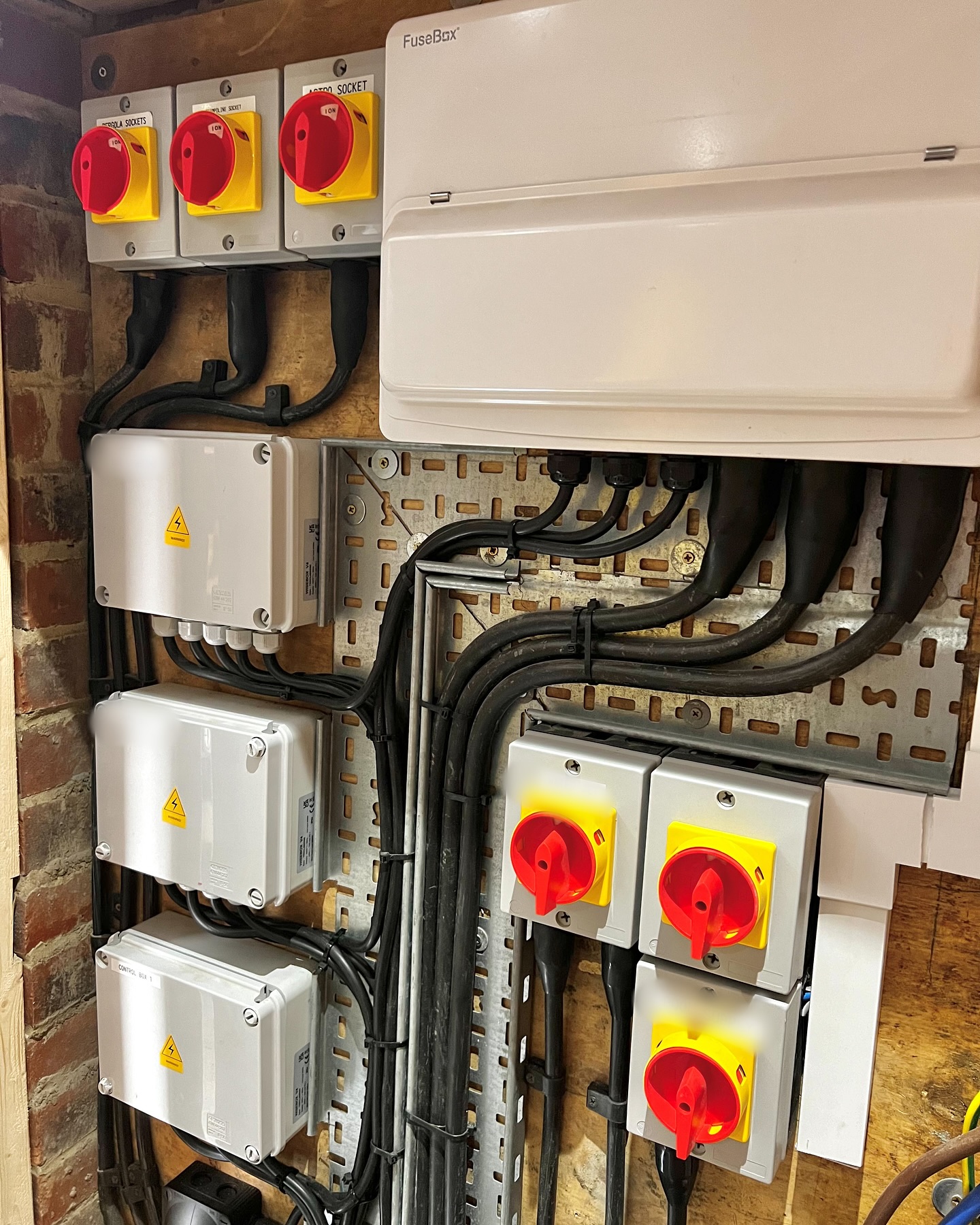
How Much Does a House Rewire Cost in Kent?
If you are planning a house rewire, the first thing you want to understand is the cost. It is a significant piece of work, and naturally you want to know what you are getting into before making any decisions.
The reality is that rewiring costs are more predictable than many people think. While every property is different, there are clear price points based on size, layout, and whether the property is occupied during the work. This guide will walk you through what you can expect in Kent, using real pricing rather than broad estimates.
What is a house rewire and when is it needed?
A house rewire involves replacing the electrical wiring throughout a property. This includes cables behind walls and under floors, sockets, switches, lighting circuits, and usually the consumer unit.
You might be considering a rewire because your property is older, you are renovating, or you have had an EICR that has highlighted issues. In many homes across Kent, especially those that have not been updated in a few decades, the wiring may still be functional but no longer meets modern safety standards.
Rewiring is not just about compliance. It ensures your home is safe, reliable, and able to cope with the way we use electricity today, from kitchens full of appliances to home offices and electric heating systems.
So how much does a house rewire cost in Kent?
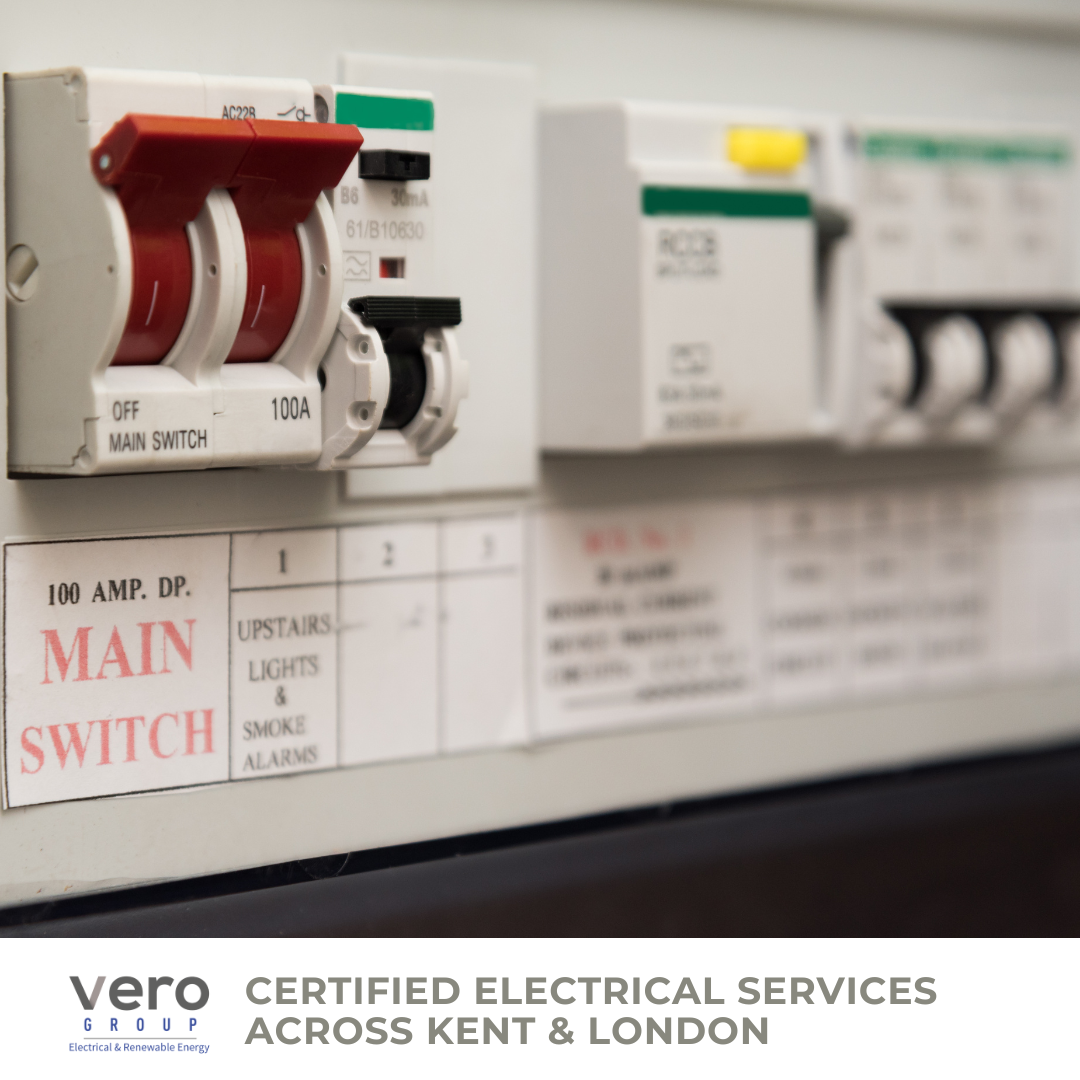
In Kent, the cost of a rewire is largely driven by the size of the property and whether it is empty or lived in at the time of the work.
For smaller properties such as flats, prices tend to start from just under £2,000 plus VAT if the property is unoccupied, rising to around £2,500 plus VAT when it is occupied. As the size increases, so does the cost, but not as sharply as many people expect.
For a typical three bedroom house, which is one of the most common enquiries, you are generally looking in the region of £3,995 to £4,495 plus VAT. Larger four bedroom homes usually fall between £4,495 and £4,995 plus VAT, with five bedroom properties reaching up to around £5,495 plus VAT.
If you want to see a full breakdown based on property type, you can view detailed pricing here.
Does it make a difference if the property is occupied or unoccupied?
Yes, and it is one of the biggest factors affecting both cost and how the work is carried out.
As an example, a one bedroom flat costs around £2,495 + VAT when occupied, and £1,995 + VAT when unoccupied.
When a property is unoccupied, electricians can work quickly and efficiently. Floors can be lifted without needing to move furniture, walls can be chased freely, and the entire job can be completed in a more straightforward way. This is why unoccupied rewires are usually more cost effective.
In an occupied home, everything becomes more controlled. Work often needs to be phased room by room, furniture has to be protected or moved, and care is taken to ensure you are not left without power for long periods. It is a more careful process, and that additional time is reflected in the price.
For many homeowners, the choice comes down to timing. If you are renovating or between tenants, it is usually worth doing the rewire while the property is empty.
What is included in the cost of a rewire?

A proper rewire is not just about replacing cables. It is a full upgrade of the electrical system to meet current standards.
This typically includes:
- New wiring throughout the property
- A modern consumer unit
- Updated earthing and bonding
- New sockets, switches, and lighting points
- Testing and certification to confirm everything is safe and compliant
Most electricians will carry out basic making good, such as filling chases in walls, but full redecoration is usually separate. It is always worth checking what is included so you can plan accordingly.
Do you always need a full rewire?
No, and this is where honest advice matters.
Not every property needs a full rewire. Sometimes the issues identified can be resolved with targeted upgrades, such as replacing the consumer unit or addressing specific circuits.
However, if the wiring is old, deteriorating, or inconsistent across the property, a full rewire is often the most practical long term solution. It avoids ongoing patch repairs and gives you a clean, reliable system going forward.
How long does a rewire take?
The timeframe will depend on the size of the property and how accessible everything is.
A smaller flat might be completed in a couple of days, while a three or four bedroom house will usually take around a week. If the property is occupied, it may take slightly longer as the work is often phased to reduce disruption.
Planning the work alongside other renovations can make a big difference, both in terms of time and overall cost.
Is rewiring worth the investment?
For most homeowners, the answer is yes.
A rewire improves safety, reduces the risk of electrical faults, and ensures your home is fit for modern living. It also removes uncertainty. Instead of wondering whether the electrics are up to standard, you know they are.
If you are selling or renting the property, updated electrics can also make it more attractive and easier to pass inspections.
Not sure if you need a full rewire?
If you are unsure where your property sits or whether you need a full rewire at all, the best next step is a simple assessment.
We can give you straightforward advice and a fixed quote so you know exactly what to expect before any work begins.